Hosting
Mahjong, Margaritas & Maybe a Little Friendly Trash Talk
How to Host a Great American Mahjong Night in Tampa Bay

A mahjong gathering might start in a group text.
“Who’s in?” · “Thursday?” · “Can we do 6:30?” · “Wait, who has the jokers?”
And suddenly, somehow, you’re hosting.
The good news? Your Tampa Bay mahjong night does not have to involve digging through closets for four mismatched racks, wondering where the dice disappeared to, or discovering at the last minute that nobody has the current card.
With an American mahjong rental, you can skip the equipment scavenger hunt and get straight to the good stuff: clicking tiles, catching up with friends, learning a new hand, and possibly delivering a very confident “Nope, that’s mine” when someone discards exactly what you need.
Because American mahjong is more than a game. It’s a social ritual—with tiles.
Why Rent American Mahjong?
If you play every week and have a dedicated mahjong closet (yes, that is a thing), buying a complete set may make perfect sense.
But if you’re hosting a birthday, trying mahjong for the first time, planning a vacation game night, welcoming beginners, or gathering a rotating crew of players, renting can be wonderfully simple.
No major investment. No hauling a giant game box across town. No wondering where you’re going to store everything afterward.
And perhaps most importantly: no missing-piece panic.
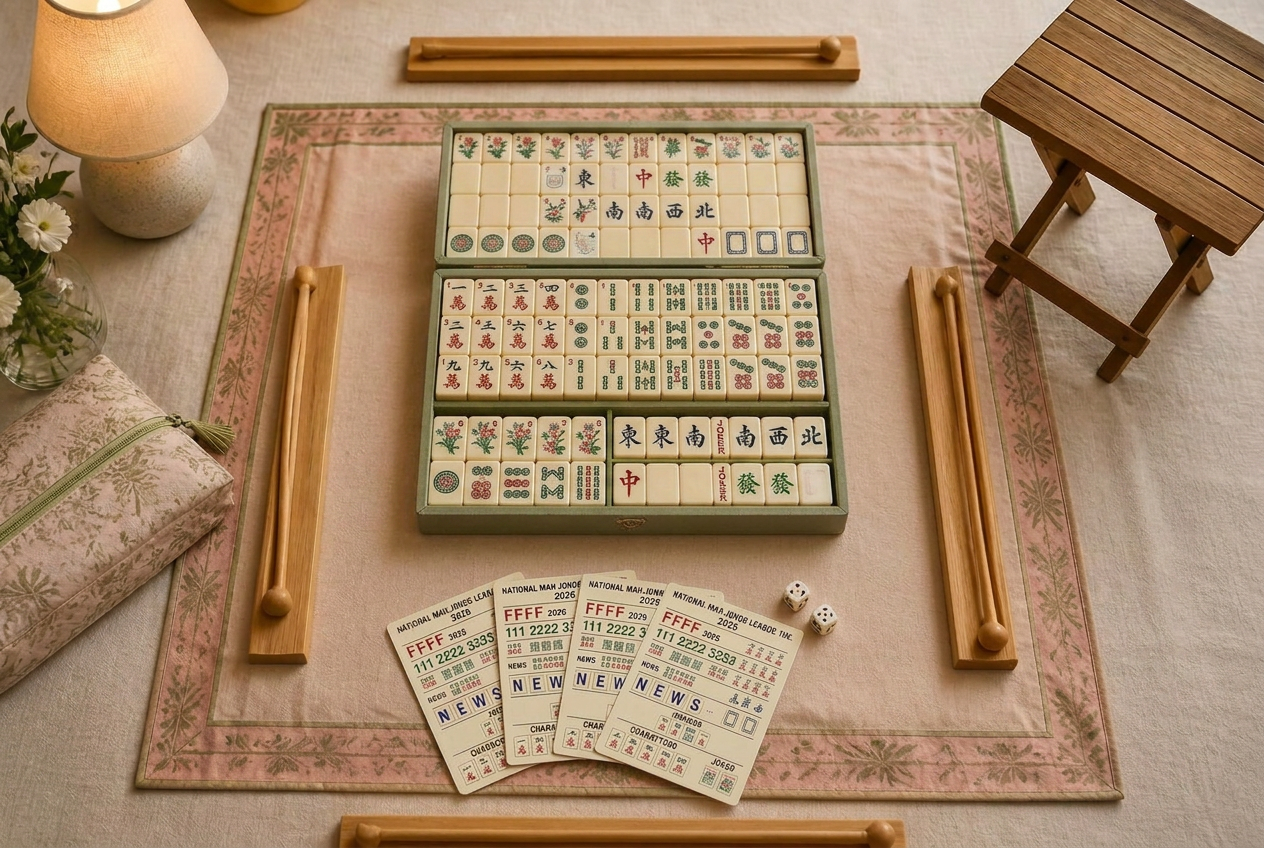
A proper American mahjong setup involves more than a pretty pile of tiles. You need racks, pushers, dice, a playing surface, and the current National Mah Jongg League card. When everything arrives together, you can spend your energy on hosting—not troubleshooting.
That matters even more when beginners are at the table. They already have plenty to remember: Charleston, exposures, jokers, calls, hands, and the eternal question of “Wait… whose turn is it?”
A complete, organized setup lets everyone sit down and learn without feeling like they’ve accidentally enrolled in an equipment-management seminar.
What Should Come With Your Mahjong Rental?
Before you book, don’t stop at “mahjong set.” Ask what you’re actually getting.
A well-prepared American mahjong setup should include:
- ✦American mahjong tiles
- ✦Four racks
- ✦Four pushers
- ✦Dice
- ✦A playing mat
- ✦The current game card — or clear instructions about whether you’ll need to provide one
If you’re inviting more than four people, think about how you want the gathering to work.
Are four people playing while everyone else snacks and socializes? Will guests rotate in and out? Do you want multiple games happening at once? Are you teaching a group of complete beginners?
The answer may determine whether you need one set, multiple sets, a second table, or simply a comfortable spot for people to sip something cold and gossip while they wait for their turn.
And yes, Florida gets to have fun with this.
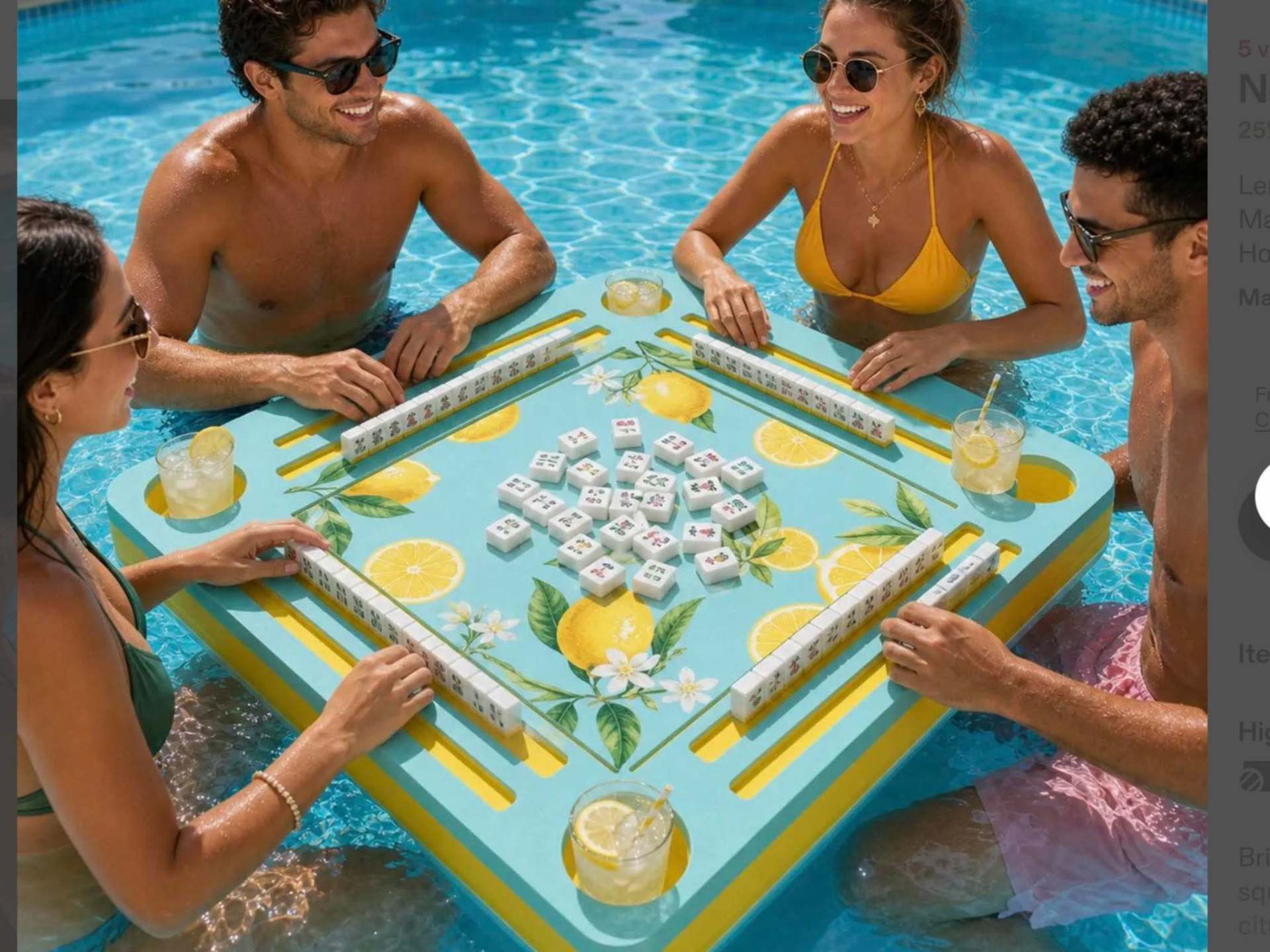
For a sunny Tampa Bay gathering, a poolside setup can turn an ordinary afternoon into an occasion. Floating mahjong tiles and a pool mat bring a distinctly Florida twist to game day.
Just remember: water, wind, sunshine, snacks, and serious card strategy don’t always make the most compatible roommates. Poolside mahjong is best when everyone is there to relax, laugh, and enjoy the afternoon—not defend their tournament ranking.
A portable travel mahjong set is another smart option for beach-house weekends, vacation rentals, or anywhere your dining table is roughly the size of a postage stamp.
The point isn’t to rent the biggest package available. It’s to rent the setup that fits your people.
Four Players? Easy. Eight Players? Still Easy—With a Little Planning.
Four players
Four experienced players are the dream scenario: one complete setup, four chairs, plenty of elbow room, and snacks within reach but safely away from the tiles.
Keep the table relatively uncluttered. Your centerpiece does not need to be auditioning for the role of Fifth Player.
Six to eight players
Now ask yourself: Is this a mahjong night or a party with mahjong?
If it’s mostly social, one table with rotating players can work beautifully. If everyone wants to play simultaneously, two sets and a second table will make life considerably easier.
A second table is also fantastic for a teach-and-play gathering. Beginners can learn at their own pace without feeling like every mistake is holding up the table.
Birthdays, bridal gatherings, fundraisers & club events
For larger gatherings, think about traffic flow as much as tiles.
Give guests somewhere to put bags. Keep drinks and food accessible without crowding the game. Add extra chairs. Create a little space for people to mingle between rounds.
Quality equipment gives you a great foundation. Good hosting gives everyone room to enjoy it.
Set the Table. Then Let the Tiles Do Their Thing.
You don’t need to turn your mahjong table into a Pinterest Olympics event.
Start with a clean surface and a good mat. Add a few bud vases or a low arrangement if you want some flair. Keep centerpieces short enough that players can still see each other—which is important when someone across the table is making suspiciously intense eye contact with their tiles.
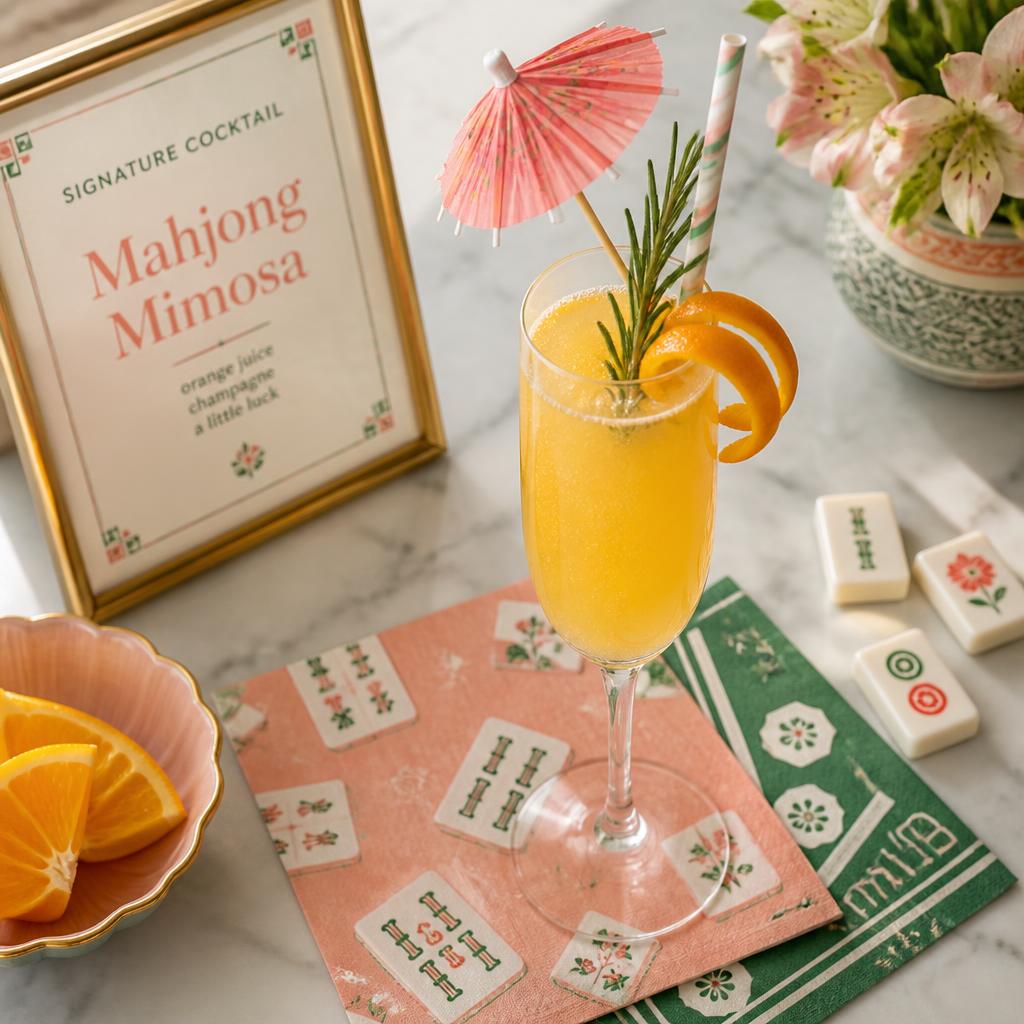
Soft lighting helps. Cloth napkins are nice. A chilled sparkling water, cocktail, or iced tea never hurts.
And then there’s food. Feed the players, not the tiles.
Choose snacks that can be enjoyed between hands without requiring a forensic cleanup afterward. Think:
- ✦Fruit
- ✦Tea sandwiches
- ✦Nuts
- ✦Cookies
- ✦Crackers and cheese
- ✦Small, easy-to-grab bites
Maybe save the saucy pasta for another night.
If you’re serving dinner, consider eating before the game or setting up a separate food station. Your mahjong mat should not double as a buffet table.
And keep the music at a reasonable volume. American mahjong has plenty of conversation built into it, and players need to hear calls. Besides, the click-clack of mahjong tiles is basically the soundtrack.
Make Room for the Beginners
Every great mahjong group started somewhere.
Probably with someone saying, “I don’t think this is that hard.”
Famous last words.
If you’re inviting newcomers, tell them ahead of time that they don’t need to know everything before they arrive. A quick demonstration can make the whole evening feel much less intimidating.
Explain the basic flow. Show them how the annual card works. Establish how your group handles questions, mistakes, and the occasional moment when everyone realizes nobody is entirely sure what just happened.
Most importantly, don’t make beginners feel as though they’re taking a test. Learning mahjong is supposed to be fun.
If you’re mixing experienced and newer players, consider having a separate beginner-friendly table. If everyone is learning, plan fewer rounds and expect some glorious rule confusion.
Laugh about it. Nobody needs to achieve mahjong enlightenment on night one.
The goal is to have enough fun that everyone wants to come back.
Need a Fourth Player?
Ah, the classic mahjong dilemma: three people are ready. One person is mysteriously unavailable.
This is where community tools can help.
Community tools can help players connect and organize games, making it easier to turn “We should totally play sometime” into an actual date on the calendar.
Because a mahjong table with three people is just a very elaborate conversation.
A Few Things to Confirm Before You Book
Renting makes the equipment side easier, but a little planning will make your gathering even smoother. Before your rental arrives, confirm:
- ✦How long is the rental period? Know when you’ll receive the equipment and when it needs to be returned.
- ✦Is pickup or delivery included? Make sure you know exactly how the equipment gets to you — and how it gets home.
- ✦What’s the policy for missing or damaged pieces? Good to know before someone accidentally sends a joker flying.
- ✦Is the setup suitable for outdoor use? Tampa sunshine is fabulous. Tampa thunderstorms have opinions.
If you’re hosting outside, have a covered or indoor backup plan.
Measure your table, too. A standard dining table can work beautifully for four players, as long as it isn’t buried under decorations and dinnerware.
Round tables encourage conversation. Rectangular tables can give players a little more room for racks and pushers.
If you’re renting a clubhouse, venue, or event space, measure the tables first. “I’m sure it’ll fit” is not a strategy.
The Secret Ingredient? Making People Feel Expected.
Here’s the thing about a memorable mahjong gathering:
It’s rarely the fancy centerpiece. It’s not the perfect playlist. And it definitely isn’t whether every guest understands the rules immediately.
It’s the feeling that someone thought about the experience.
Send a clear invitation. Give guests a start time. Tell them whether you’re serving dinner or just snacks. Let them know if beginners are welcome. Give everyone a sense of what they’re walking into.
Those tiny details make people feel comfortable before they’ve even sat down.
And once they do? Let the evening unfold.
Maybe it’s a Tuesday after work. Maybe it’s a sunny Saturday by the pool. Maybe it’s a birthday, a bridal celebration, a club afternoon, or simply the first time everyone’s calendars have aligned in three months.
Set out the tiles. Pour something refreshing. Make room for one more chair.
And prepare for at least one person to say, “Wait, are you sure that’s allowed?”
That’s mahjong. And that’s the fun.
Gather beautifully. Play memorably.