
Community
Maybe the Game Is Just How We Get Everyone to Sit Still
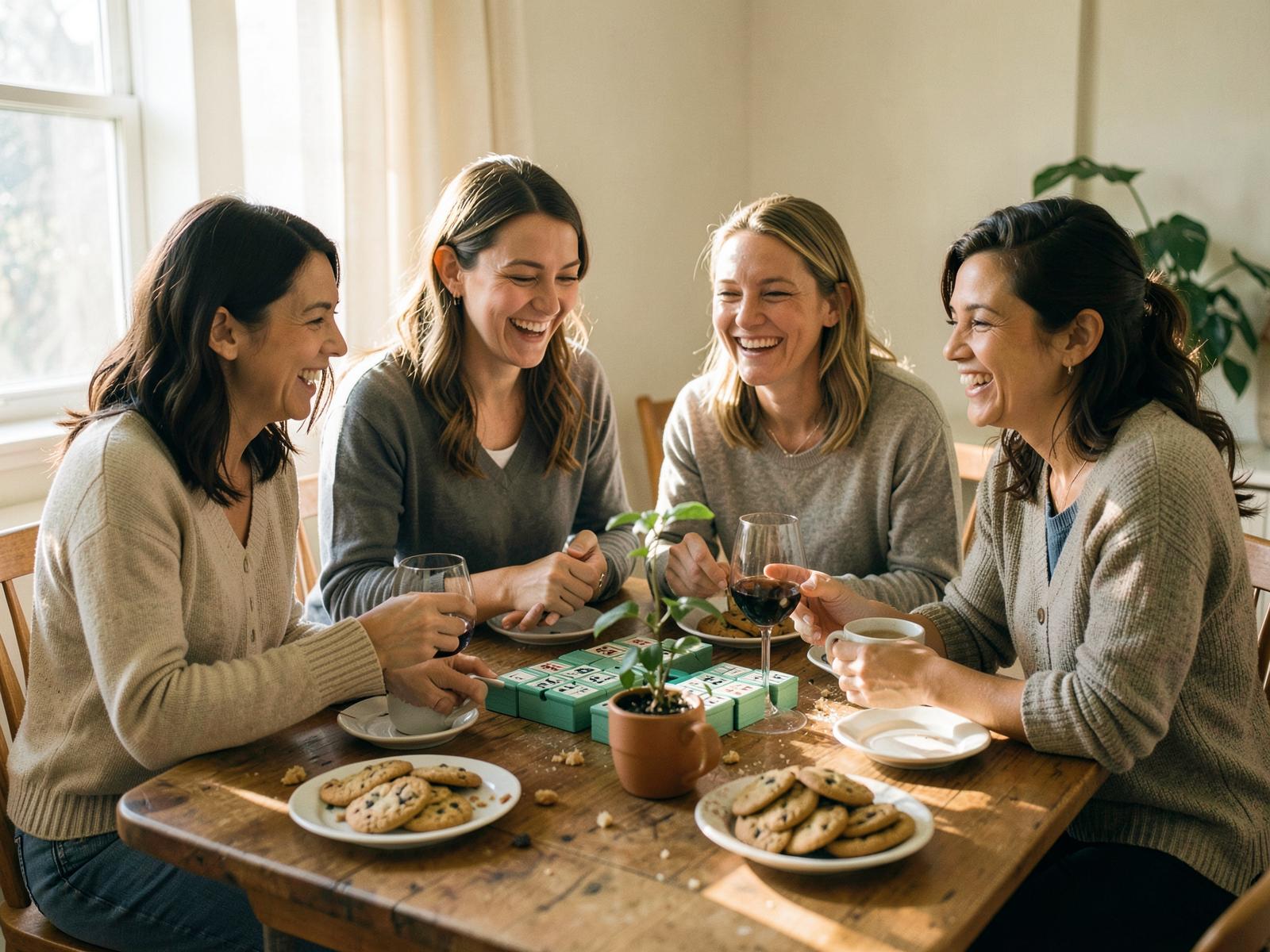
I've played cards and games for as long as I can remember.
Long before Mahjong entered my life, there were card games with family and friends. There were board games. There were people who took Canasta WAY too seriously.
Every family has at least one.
And now there's Mahjong — which has somehow gone from something I started playing to something I seem to be doing several days a week.
But I've realized something.
The game is sometimes just a very clever way of getting adults to sit around the same table for a few hours.
Think about it.
If I called you and said:
"Would you like to come sit at my table and talk to me for four hours?"
That sounds slightly concerning.
But:
"Want to play Mahjong?"
Absolutely. What time?
And once we're there, the conversation starts.
We Needed an Excuse
Adult friendship is weirdly hard.
We're all juggling work and family and errands and the vague sense that we should probably drink more water. Making plans can feel like scheduling a conference call.
"How about two Thursdays from now?" "Wait, I have a thing." "What about the third Saturday in March?" "Let me check the group chat."
And somehow, months pass.
But when there's a game involved? People show up. They bring snacks. They ask what they can bring. They arrive early and stay later than they meant to.
It's not because everyone is secretly desperate to memorize the Charleston. It's because we were all looking for permission to slow down together.
Mahjong just happens to be a really good permission slip.
The Game Gives Us Something to Do With Our Hands
There's something magical about having a shared task while you talk.
You can catch up on someone's new job, their kid's school play, their latest renovation disaster, all while tiles click and racks slide and someone pretends to be very focused on their hand.
The game keeps us present without making the conversation feel like a performance.
It gives us:
- ✦A reason to gather.
- ✦A built-in activity so no one has to invent entertainment.
- ✦Natural pauses, laughs, and dramatic reactions.
- ✦An excuse to stay until the very last hand.
And maybe most importantly, it gives us something to do besides stare at our phones.
It Was Never Really About Winning
I mean, don't tell that to the person who finally called their own tile.
Winning is fun. Mahjong can get competitive. Someone will absolutely do a little victory dance at some point, and they should.
But when I look back at the best game nights, I don't remember the scores.
I remember:
- ✦The story someone told between hands that made us all laugh until we cried.
- ✦The friend who finally felt comfortable enough to ask a 'dumb' question.
- ✦The moment the whole table groaned in unison at a bad discard.
- ✦The way nobody wanted to be the first to pack up.
The game is the container. The connection is what fills it.
From Canasta to Mahjong
My family had Canasta people. Loud, dramatic, scorekeeping-on-a-paper-napkin Canasta people. Games that lasted all afternoon and somehow always ended in someone declaring a rematch.
I didn't realize it then, but those games were doing the same thing mahjong does now. They were keeping people in the same room, around the same table, talking and teasing and actually seeing each other.
Every generation finds its own version.
For some people it's bridge. For some it's dominoes. For some it's board games or poker or backyard dice. For us right now, it's American Mahjong.
The specific game doesn't matter nearly as much as the gathering.
So What If the Real Point Is Just Sitting Still?
Maybe that's not such a bad thing.
In a world that moves fast and talks in fragments and connects through screens, there is something quietly rebellious about deciding to sit in one place with people you like for a few hours.
No agenda. No productivity. No one trying to optimize the experience.
Just tiles, snacks, and the kind of conversation that only happens when nobody has anywhere else to be.
Mahjong gives that to us. Canasta gave it to my family. Whatever your game is, it's doing the same work if it gets people around your table.
So the next time someone asks why you play so much mahjong, you can tell them:
"Because it's the only way I can get four adults to sit still and talk to each other for four hours."
And that's more than enough reason.
Gather beautifully. Play memorably.