Module 1 · Lesson 1 of 5 · 5 min
Why Everyone Loves This Game
Video coming soon
A short walkthrough for this lesson is on its way. In the meantime, the lesson and practice below have everything you need.
A game built for gathering
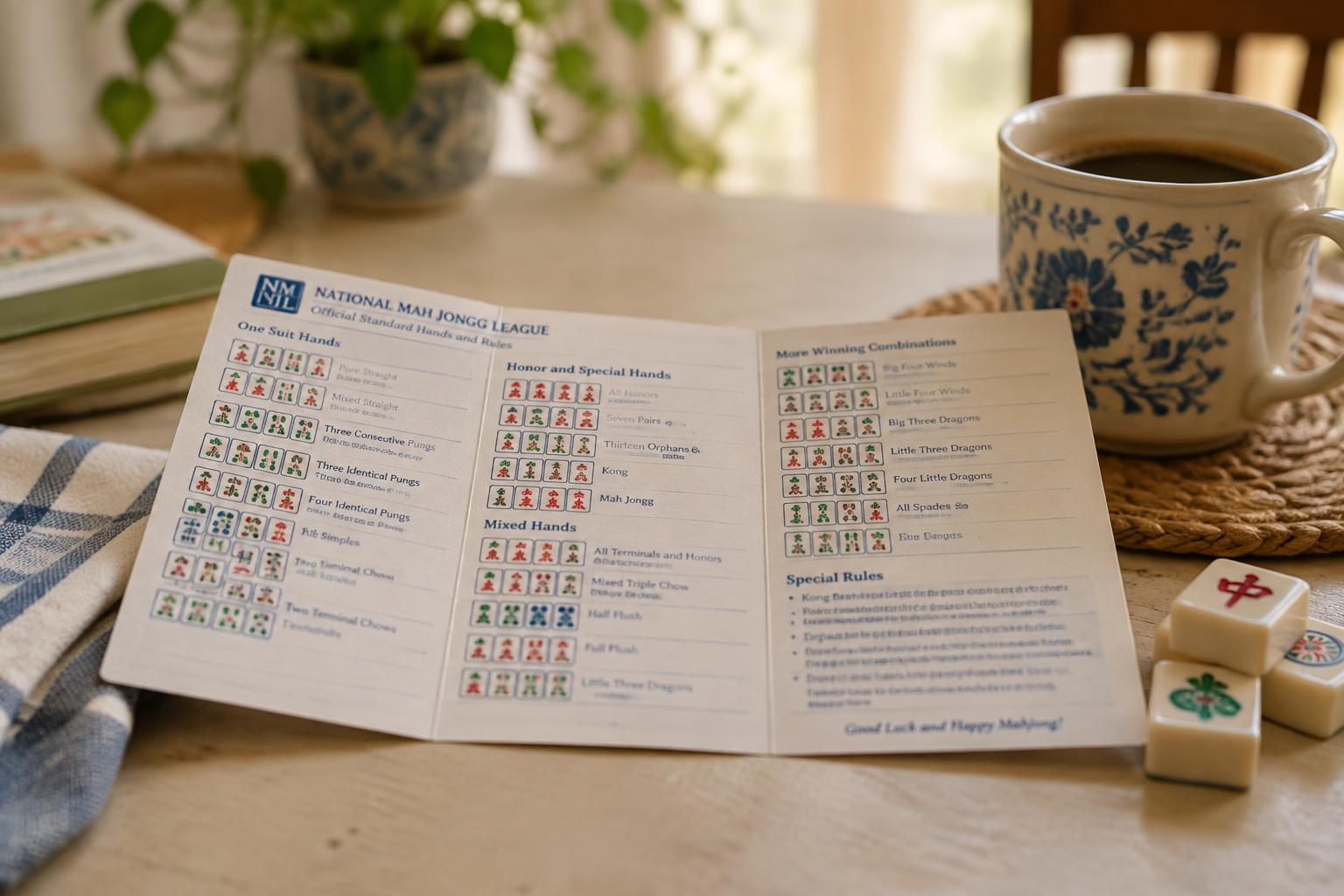
Mahjong started in China in the 1800s as a four-player tile game, traveled the world in the 1920s, and picked up a distinctly American twist along the way. In 1937 a group of players formed the National Mah Jongg League and started publishing a yearly card of hands — that card is what American Mahjong players still use today.
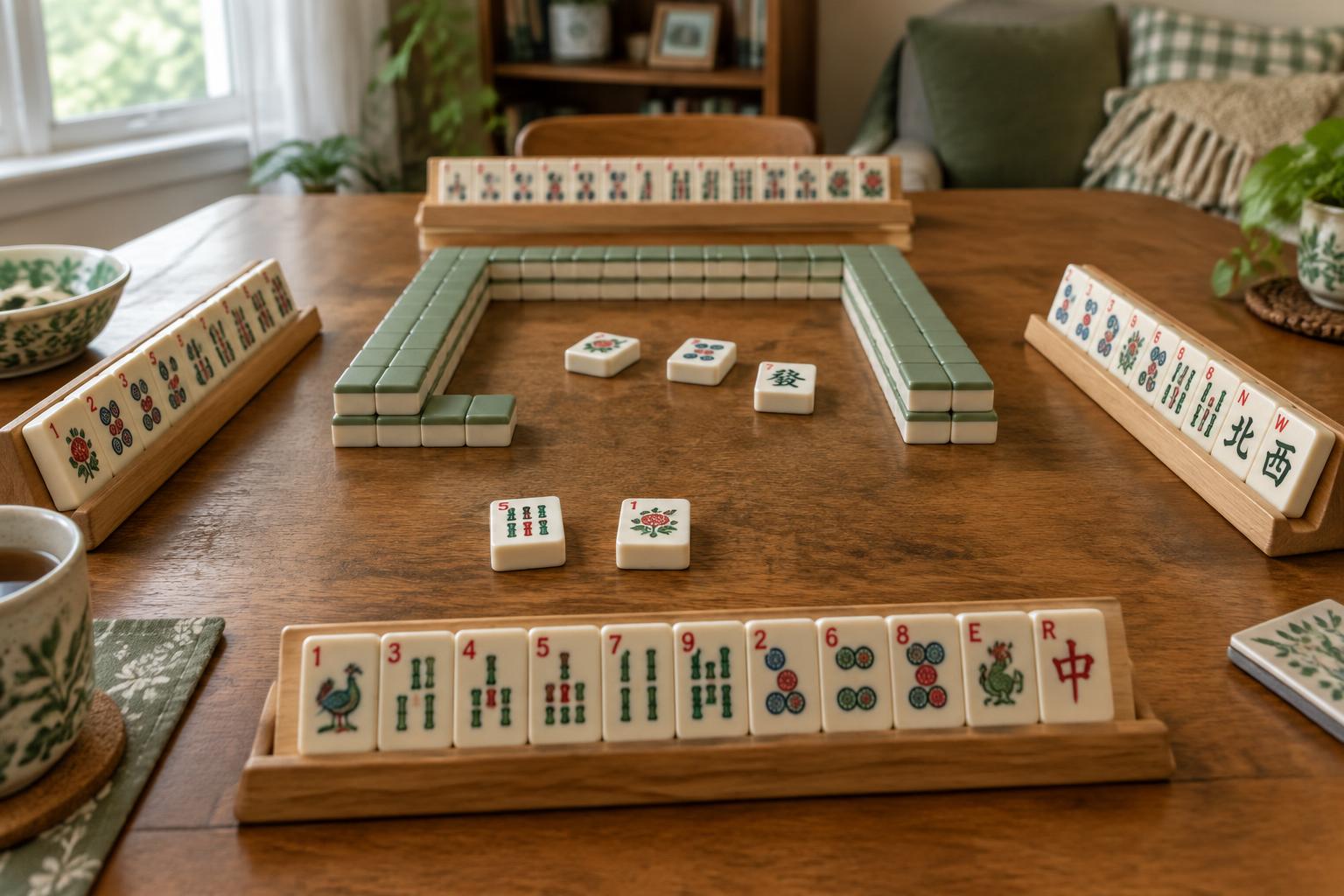
Here is the part nobody tells beginners: the tiles are not the point. The table is. Four people, a clatter of tiles, snacks within reach, and an hour that disappears. The game is just the excuse.
What you actually need to learn
You need to recognize the tiles, understand what a winning hand looks like, and know how a turn flows. That is genuinely it. Everything else is practice.
By the end of Module 4 you will have played a full hand right here in your browser, hints and all. Then you will be ready for a real table.
Three suits, two honors, one wildcard
American Mahjong uses three suits — Bams, Craks, and Dots — each numbered 1 through 9. Then there are Winds (East, South, West, North) and Dragons (Red, Green, and the white one everyone calls Soap). Finally, Jokers: wildcards that make this version of the game wonderfully forgiving.
Practice